
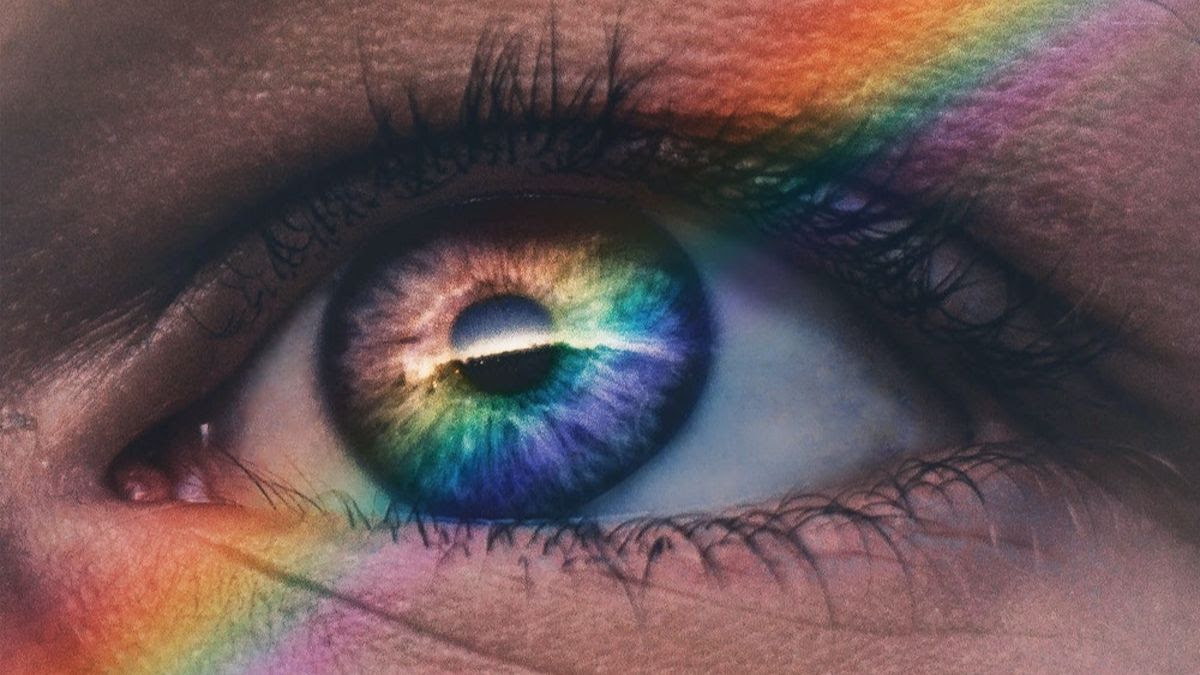
This is the question, which when I heard Moshe Feldenkrais asking it, made me realise he was on another level. That his intellect was far above the vast majority of people.
The answer is no, of course. But who stops to ask the question?
When do we start to see light in the womb? It’s a question I’ve been thinking about recently. Not at the start of foetal life. But by the end, the mother’s belly is stretched pretty thin. So I think our eyes are already registering light and dark before we’re ejected into the world.
Even if we can’t yet make sense of it at that point. It would make sense for the eyes to be preparing, in the same way that we can hear and taste in the womb. Babies are moving from very early. Perhaps the moving helps growth. Just as it helps us feel ourselves once we’re out. Thanks to modern technology, we can see foetuses round and arch from 13 weeks. (Before we can call it a back). They look like tiny seahorses. Later, once legs and arms are created, they stand, push against the walls. Along with kicking, pressing, and moving their hands and feet, as any mother can testify!
Light is of fascination to all of us.
Even as adults our attention is drawn by light. You only have to turn on a television in a room, to see the attention drawn to it. It’s just as interesting to babies. It takes some time for the baby to focus, and to be able to register exactly what they’re seeing. So eye movements are some of the first movements we make. It’s part of how we orient in space. Where’s the light coming from? It’s why completely dark rooms can be very calming to some, but disorienting to others.
Our eyes respond to sound, as our ears respond to our vision. So the eyes are an important part of developing our vestibular sense. When people can’t move their eyes with smoothness it creates difficulties elsewhere. Often in the neck, spine, and it affects balance.
Coming back to basics
We rarely query how we move and how our body works, until something goes wrong. In the last 10 years I’ve been seeing on a weekly basis how becoming more aware of how we do what we do can change. No matter how old, no matter where we start. It’s not magic, it’s locking into the way that we learn in the beginning, to continue to learn and improve as we age.
 Transform how you move, feel and live