I enjoy being back in a learning environment. Having to explain what I’m showing or doing clarifies it for me along the way: one of the joys of teaching! So useful for my own practice. This cohort are now approaching their 4th (and final) year, and they’ re looking good!
I get the added bonus of having many more experienced teachers than me to pick their brains too!
Last week, Garet Newell, a pioneer of the Feldenkrais Method in the UK was teaching the students. She studied with Moshe Feldenkrais himself in Amherst and later in Israel as well. She taught a great series of lessons improving the quality of connection of the arms to the sternum. Which at the same time improves the connection through the whole skeleton.
What I love about Garet’s teaching is the clarity and simplicity she brings to her teaching of the hands on work. Bite sized pieces that everyone can follow. Showing what to do, and then options if that doesn’t work for someone.
This week we have our usual trainers, Elizabeth Beringer, who also studied like Garet in the US and Israel. She runs trainings in the US and Switzerland as well as the UK. Along Scott Clark, my first teacher. They’re an impressive teaching team.
What’s nice when I go back into the training, is that I can now see something a trainer does and do it. Or take on board any critique I’m fortunate enough to receive and use it to improve my own practice.
I can see where I started, and where I am now. Something that in any learning process can be hard to see. One of the difficulties in learning and teaching an instrument is realising what you can do.
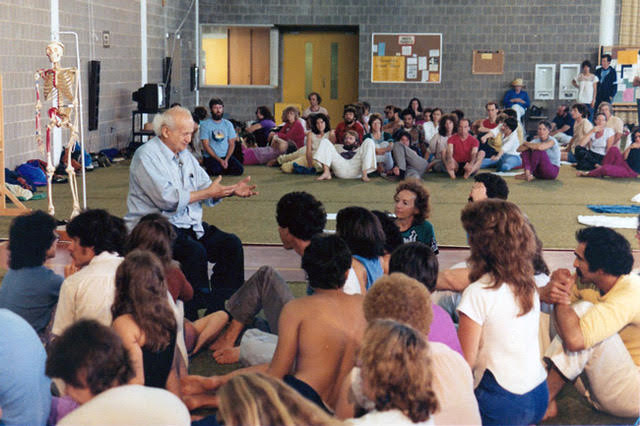
Feldenkrais wanted to call his method Yes you can! which sounds much better in Hebrew. (He immigrated to Israel in 1917 – a story which is a whole post in itself!) And I see it from students, both my own, and in the training. Something they thought they couldn’t do, and then can. It can be mundane- being able to turn around to see behind you when driving, but valuable.
Feldenkrais Method is a learning method. It’s something we can refine, and learn more about, to improve our skill at moving. Like playing the instrument, but we’re the instrument. It’s something we can all benefit from, as learning is something we can all get better at.
Casals said that he practised because he was still improving. As humans, our ability to learn and adapt is one of our superpowers. The Feldenkrais Method is one way of improving that superpower.
What are you interested in learning more about?
I’m taking a social media break for a few weeks until the end of August, have a lovely rest of month!
 Transform how you move, feel and live